Rzeczpospolita Polska
POLAND
Polska · pick a thread and pull
Click a ring to open it · Esc goes back
01 — What is on the table

JedzenieFood

Heavy, sour, smoked and slow. Polish cooking was built for long winters and short growing seasons, and it never really stopped being built that way.
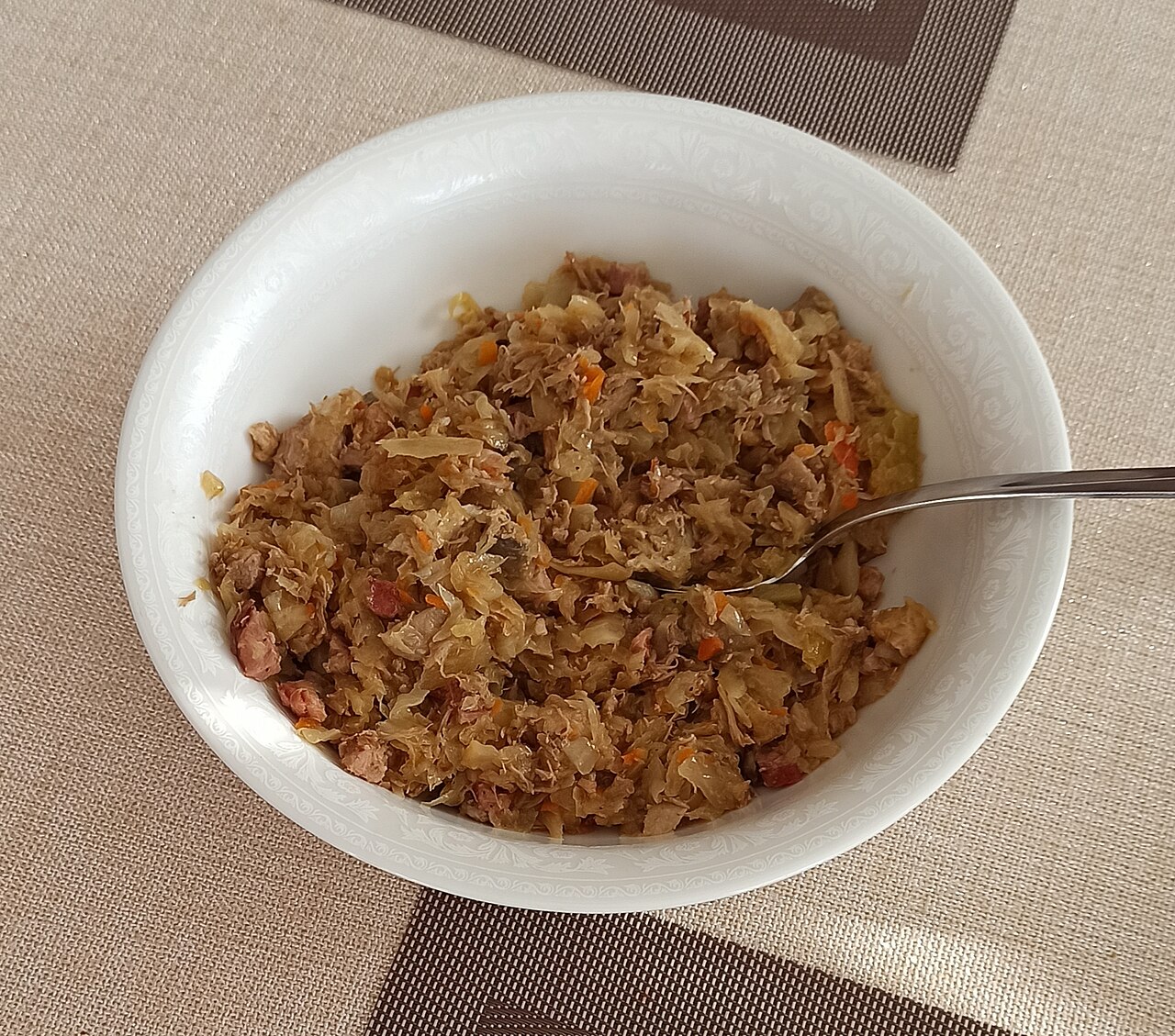
A bowl of bigos, the Polish hunter’s stew of sauerkraut and meat

Bigoshunter's stew

Sauerkraut, fresh cabbage, mushrooms and whatever meat there is, cooked down for hours. It is better on the second day and better still on the third.
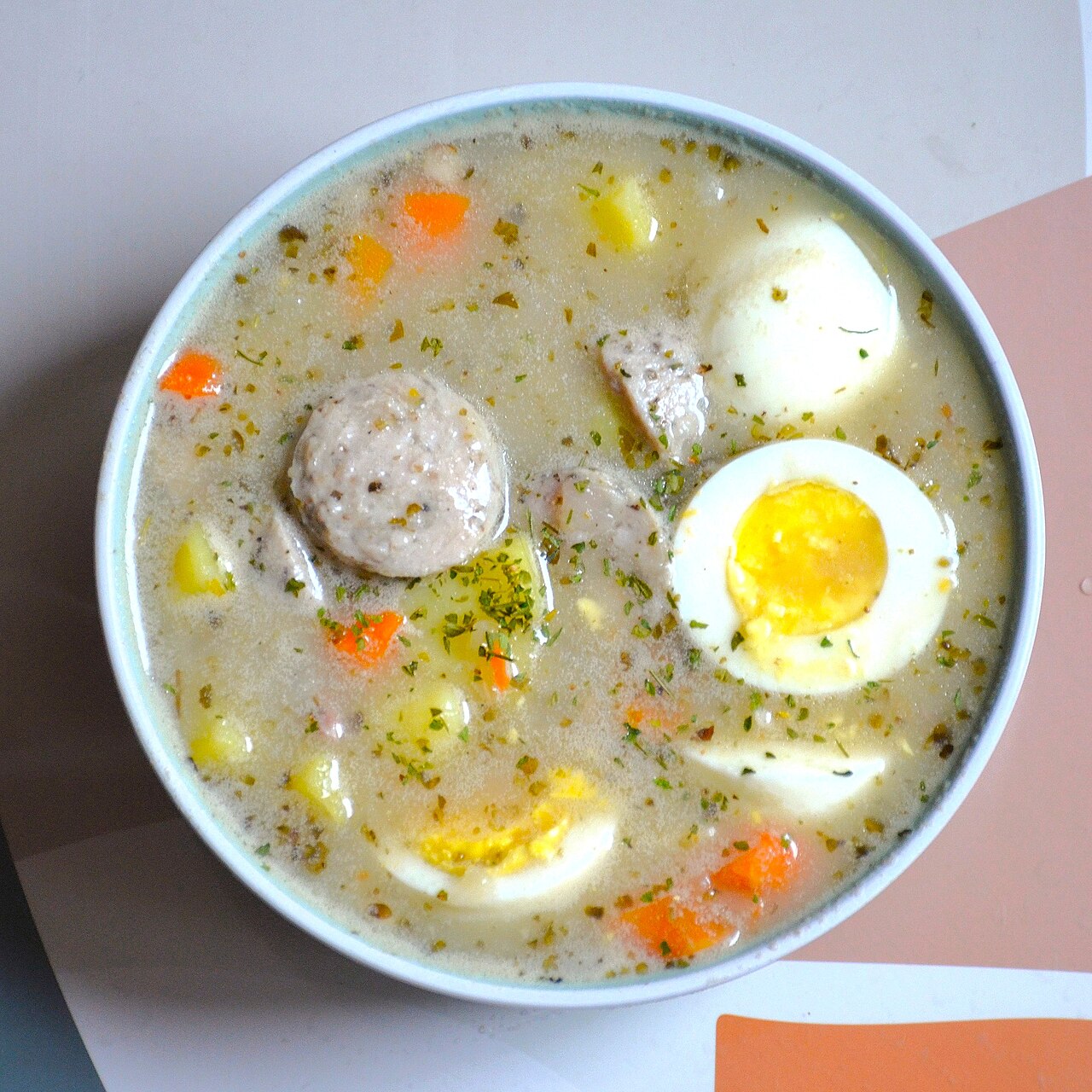
A bowl of żurek, sour rye soup with a boiled egg

Żureksour rye soup

Soured with fermented rye flour, poured into a hollowed loaf, with white sausage and half a boiled egg. Easter breakfast, and a hangover cure the rest of the year.
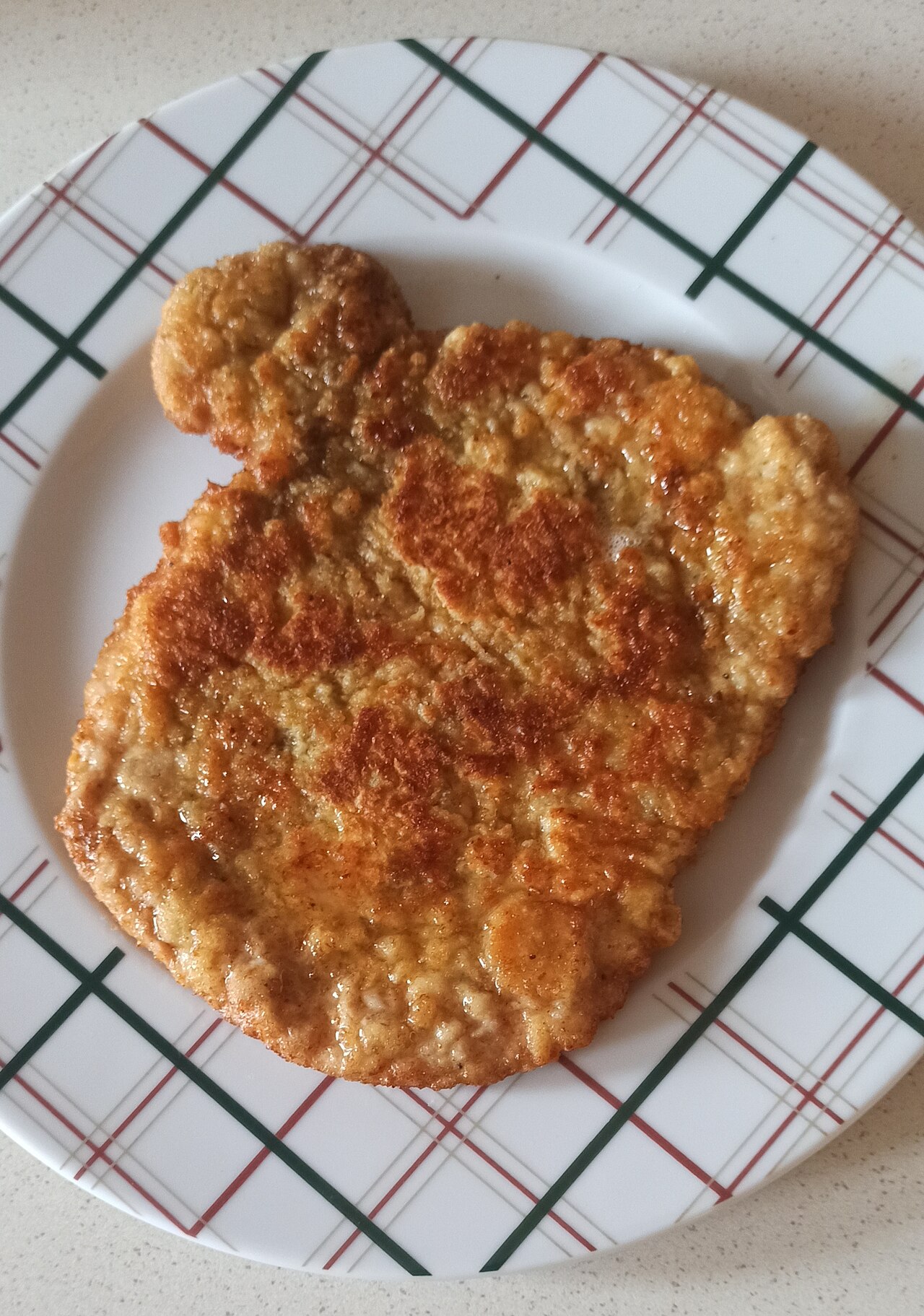
A golden breaded pork cutlet, kotlet schabowy

Kotlet schabowybreaded pork cutlet

Pounded thin, breaded, fried in butter, served with potatoes and dill. This is what Sunday dinner at a grandmother's house looks like.
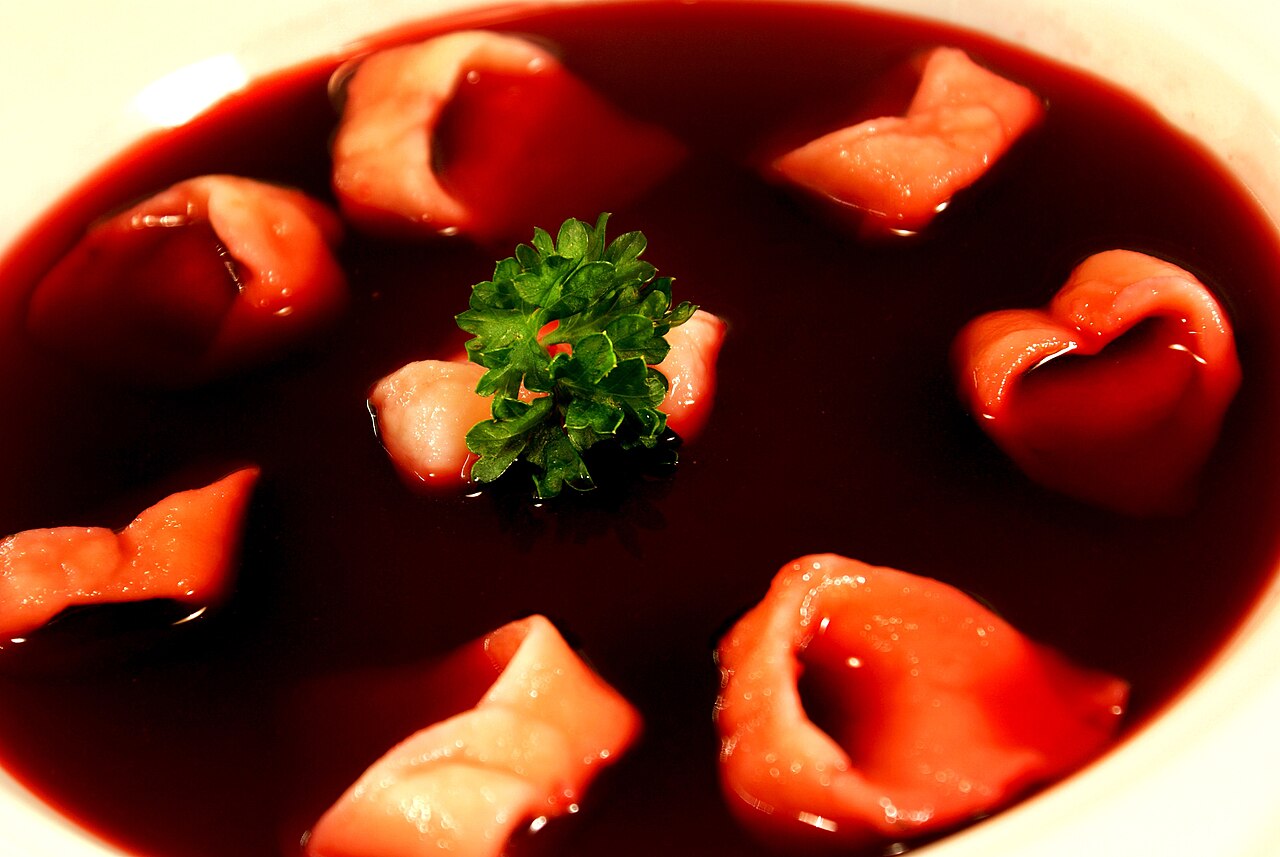
Clear red barszcz with uszka dumplings floating in it

Barszcz czerwonyclear beetroot soup

Deep red, sharp and clear rather than creamy. On Christmas Eve it arrives in a cup with tiny uszka dumplings floating in it.
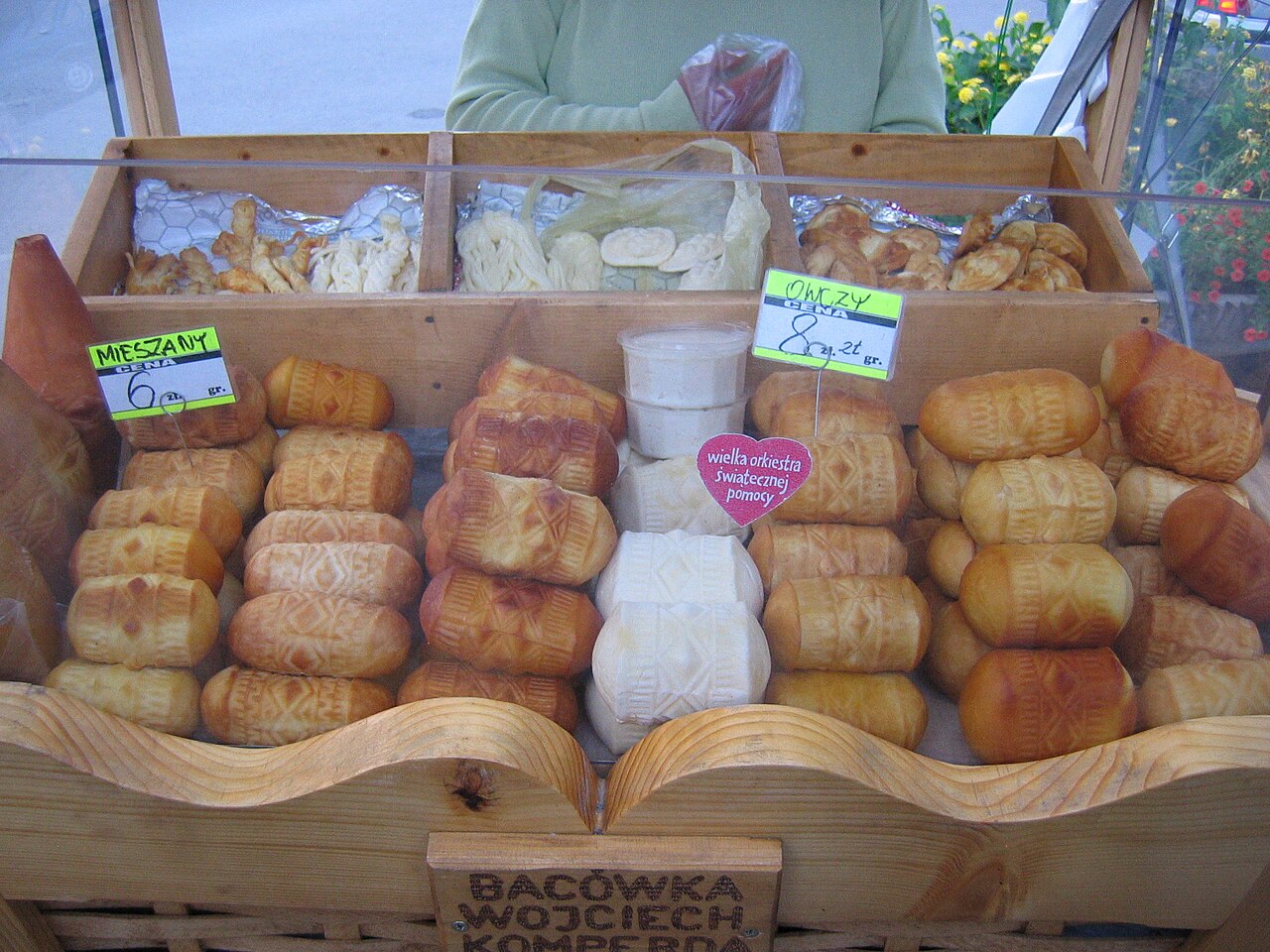
Spindle-shaped smoked oscypek cheeses on a market stall

Oscypeksmoked sheep's cheese

Pressed in a carved wooden mould, brined, then smoked over spruce in the Tatra mountains. Sold grilled with cranberry jam. Protected by EU origin law.
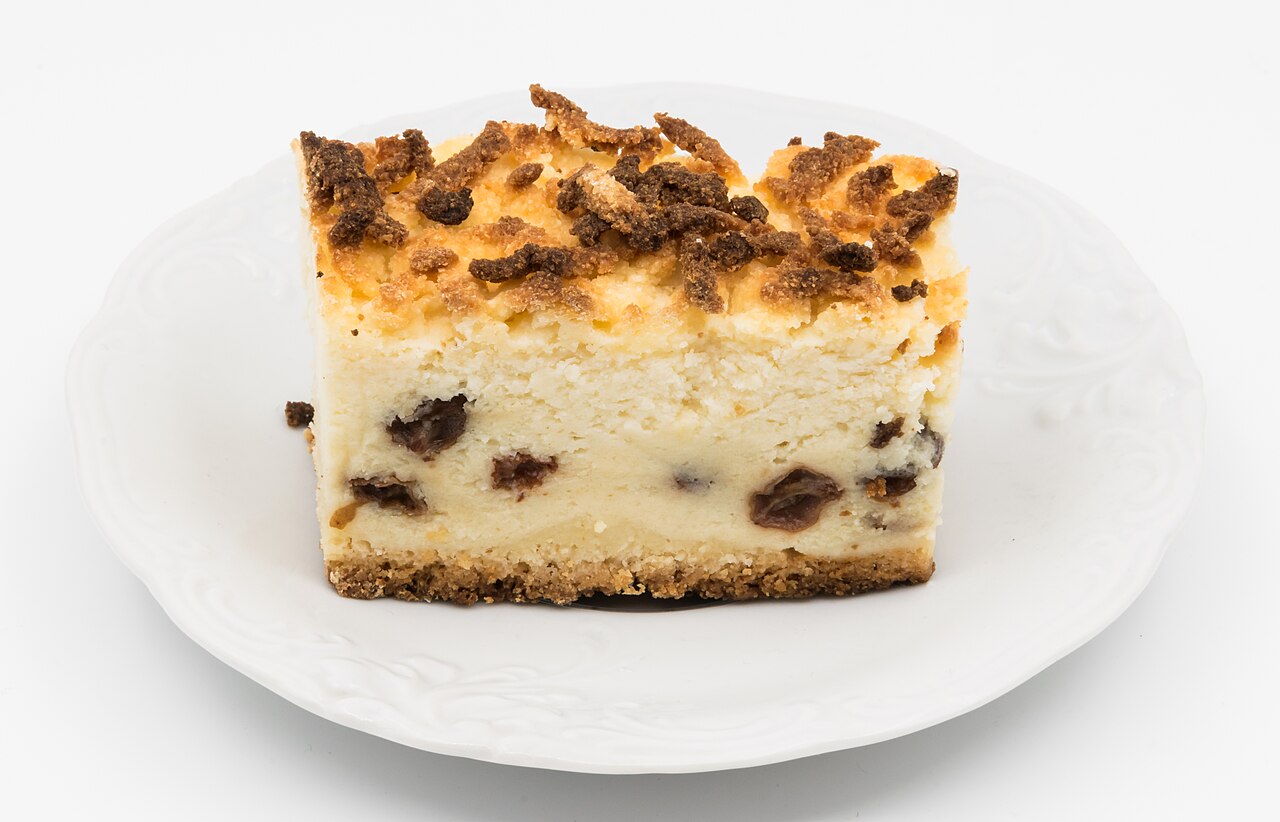
A slice of Polish sernik cheesecake with raisins

Sernikcheesecake

Made with twaróg, not cream cheese, so it is drier and more crumbly than the American kind. Often with raisins, which people have strong opinions about.

Pierogi have a whole presentation to themselves — go back and press the gold ring. Photos from Wikimedia Commons, used under their free licences — bigos & kotlet schabowy by Aw58 (CC BY 4.0) · żurek by Marsilar (CC BY-SA 4.0) · barszcz z uszkami by Michał Lech (CC0) · oscypek by Kobayashiii (public domain) · sernik by Jacek Halicki (CC BY-SA 4.0).
02 — The year, in order

TradycjeTraditions

Most of them are older than the church calendar they got attached to. Water, fire, grain and wax — pre-Christian habits wearing saints' names.

Easter Monday

Śmigus-DyngusWet Monday

Everybody throws water at everybody. Buckets, hoses, water guns from a balcony. No one is exempt and there is no way to opt out.

21–24 June

Wiankiwreaths

Midsummer. Girls float flower wreaths with candles down the river; whoever fishes one out downstream is supposed to be the match.

Late August

Dożynkiharvest festival

The end of the harvest. A crown woven from the last grain is carried in, and the village eats outdoors on long tables.

29–30 November

AndrzejkiSt Andrew's Eve

Fortune-telling night. Hot wax is poured through a keyhole into cold water and the shadow of the shape it makes is read for your future.

24 December

WigiliaChristmas Eve supper

Twelve meatless dishes, and nobody starts until the first star is seen. A place is laid for an unexpected guest, and everyone shares the opłatek wafer.

Wigilia is the one with the pierogi: sauerkraut and mushroom, plus uszka in the barszcz.
03 — Eight dates that did the damage

HistoriaHistory

Poland spent 123 years not existing on any map, and came back twice. That fact explains most of the rest of the country.

966

The baptism

Mieszko I is baptised. Historians treat this as the birth certificate of the Polish state.

1385

Union with Lithuania

The Union of Krewo ties Poland to Lithuania by marriage, creating a European heavyweight.

1569

The Commonwealth

The Union of Lublin makes it formal: one elected king, one parliament, two nations.

1791

Constitution of 3 May

The first codified national constitution in Europe, and the second in the world after the USA.

1795

Erased

The third partition. Russia, Prussia and Austria divide the country and Poland leaves the map for 123 years.

1918

Back again

11 November. Independence is restored at the end of the First World War. It is still the national holiday.

1939

Invaded twice

Germany from the west on 1 September, the Soviet Union from the east on the 17th. The Second World War starts here.

1989

Solidarność wins

Partly free elections in June. Solidarity takes almost every seat it is allowed to contest, and the bloc starts to come apart.

The dashed cards are the two times the country was taken off the map.
04 — Click a tile to hear how it works

JęzykLanguage

Seven grammatical cases, three genders and no words for “the” or “a”. The spelling looks impossible and is actually almost perfectly regular — every letter is always said the same way.

cz
= ch
as in church — czarny, “black”
sz
= sh
as in ship — szkoła, “school”
rz / ż
= zh
as in measure — rzeka, “river”
ś
= soft sh
a hissier sh, tongue forward — środa, “Wednesday”
ł
= w
as in water — Łódź is said “wooj”
ą
= on
nasal, through the nose — mąka, “flour”
ę
= en
nasal again — ręka, “hand”
w
= v
never “w” — Warszawa is “var-SHA-va”
W Szczebrzeszynie chrząszcz brzmi w trzcinie.
“In Szczebrzeszyn a beetle buzzes in the reeds.” The standard test of whether you can really speak Polish — and yes, Szczebrzeszyn is a real town.
Longest everyday word people enjoy pointing at: szczęście — happiness. Six consonants, one vowel sound.
05 — Five national dances

Muzyka i taniecMusic & Dance

Poland has five officially national dances. Four of them are in triple time, which is why so much Polish music sounds like it is leaning forward.

3/4

Polonezthe polonaise

Slow, stately, walked rather than danced. It opens formal balls and every school leavers' ball in the country, exactly a hundred days before the exams.

3/4

Mazurthe mazurka

Fast, proud and full of heel clicks and stamps. The national anthem is written in its rhythm.

2/4

Krakowiakfrom Kraków

The only one in duple time. Syncopated, jumping, danced in the peacock-feather hats you see on every postcard from Kraków.

3/4

Kujawiakfrom Kujawy

The slow, sad one. Swaying and lyrical, usually played as the calm before an oberek breaks out.

3/8

Oberekthe spinner

The fastest of the five. Constant turning, lifts and drops to the floor. The name comes from obracać się — to spin around.

Fryderyk Chopin

Born 1810 near Warsaw, left at twenty and never came back. He wrote around 58 mazurkas and 16 polonaises — folk dances rebuilt as concert music. He is buried in Paris, but his heart was smuggled back to Warsaw in a jar of cognac and sealed into a pillar of the Church of the Holy Cross, where it still is.